Laurel Wilt

Raffaelea lauricola & Xyleborus glabratus

Eichhoff

Last updated by: 
Faith Campbell

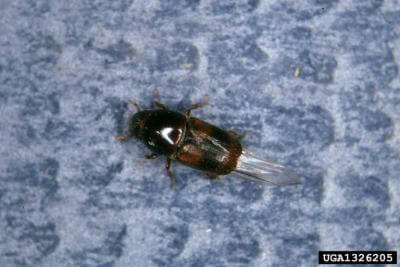
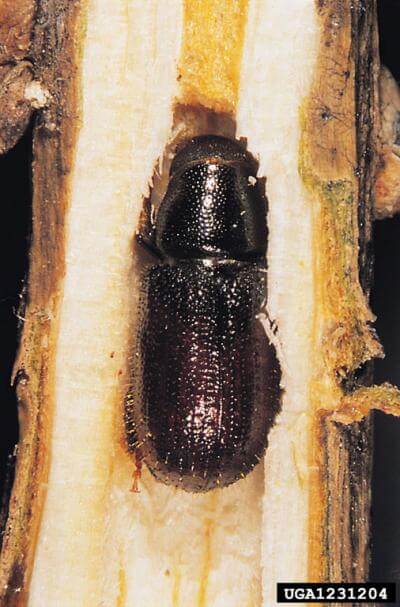
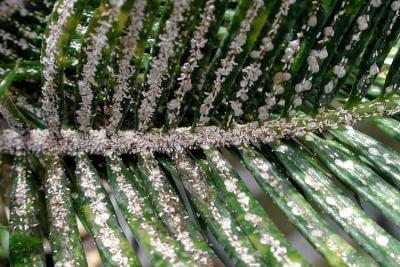
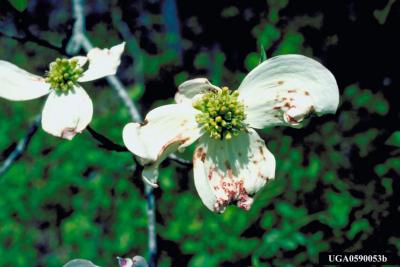
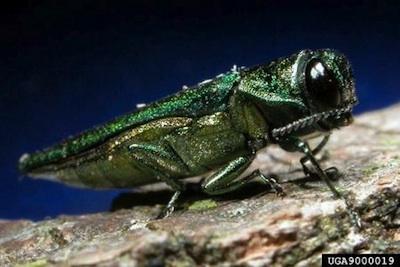
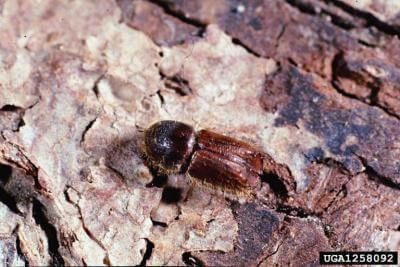
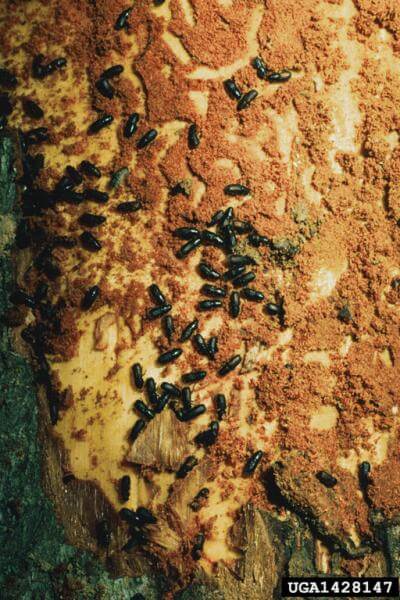
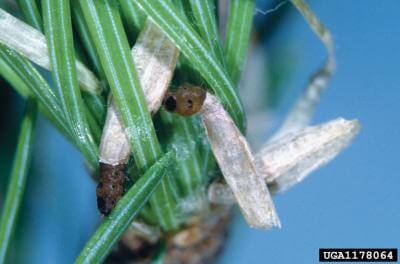
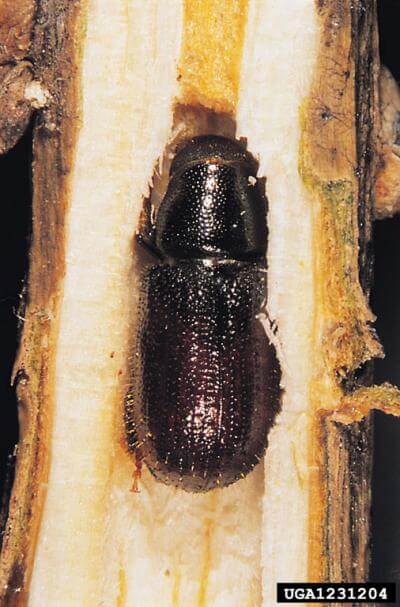
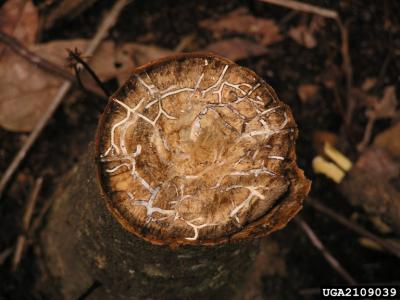
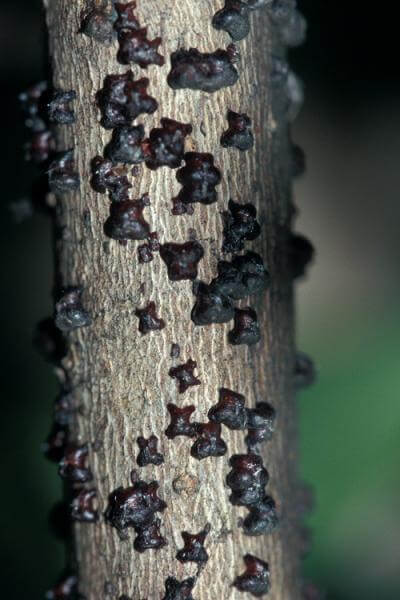
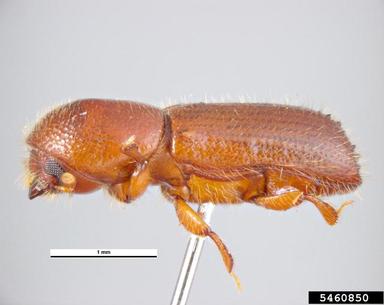
Laurel wilt - ambrosia beetle Xyleborus glabratus and associated fungus Raffaelea lauricola

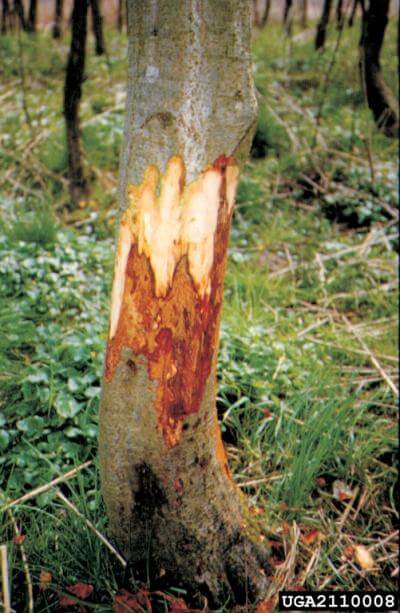
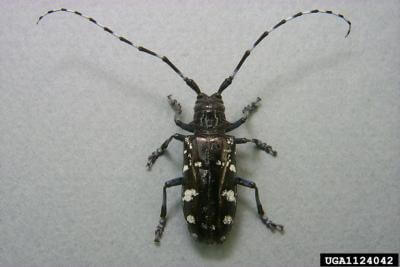
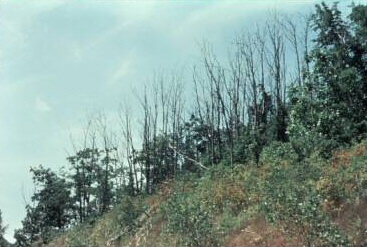
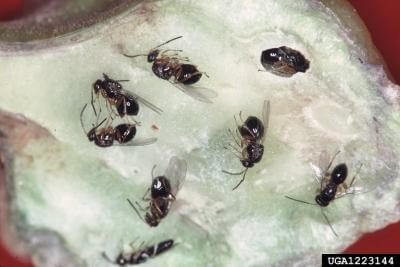
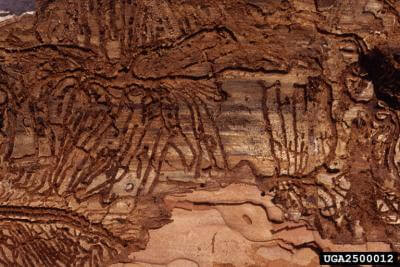
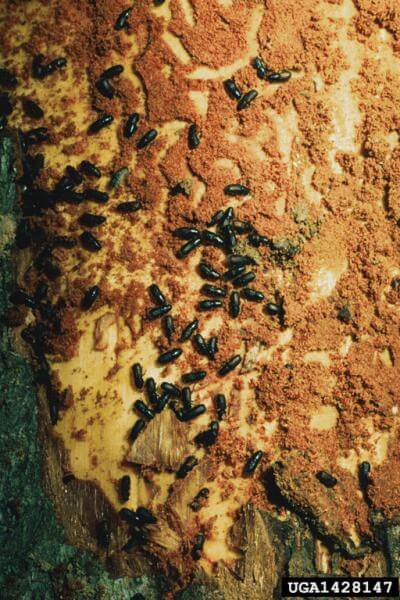
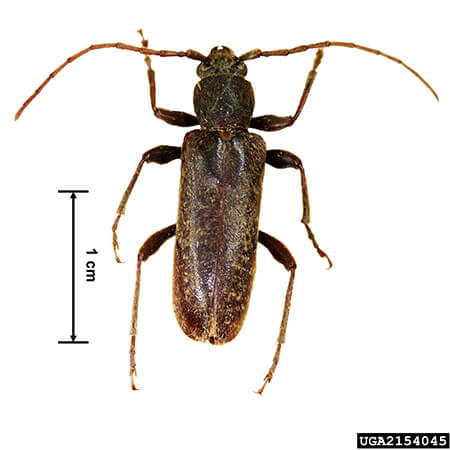
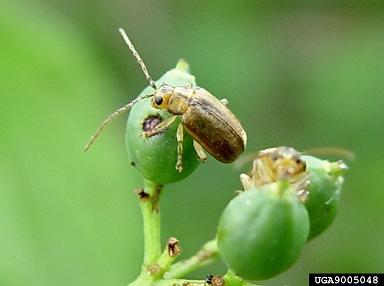
Beginning in 2003, scientists began receiving reports of dying redbay trees (Persea borbonia (L.) Spreng.) in coastal areas of Georgia and South Carolina (J. Johnson, Georgia Forestry Commission, pers. comm. 4 April 2005), then in northeast Florida (J. Foltz, University of Florida, pers. comm. November 2005). The cause was determined to be a previously unknown fungus, Raffaelea lauricola (T.C. Harr., Fraedrich & Aghayeva) transported (vectored) by a recently introduced ambrosia beetle from Asia, Xyleborus glabratus (Fraedrich et al. 2008). The beetle had first been detected in the United States in 2002 near Savannah, Georgia ( Rabaglia et al. 2006).

The disease has since spread rapidly – primarily inland from initial infestations and farther south in Florida. In 2009, it was present in at least 60 counties in four southeastern states (Mayfield et al. 2009). An outlying outbreak on the Mississippi Gulf coast was detected in 2009, 400 km from the nearest known infestation. This infestation is thought to have been at least 2 years old when discovered (Riggins, et al. 2010, Mayfield et al. 2009). MAP

The beetle can apparently fly several kilometers; it might also be carried on wind currents (Mayfield et al. 2009). There is also evidence that it can be transported by human movement of infested wood. Thus, in addition to the initial detection of the beetle near a port which receives significant amounts of wood packaging, several isolated outbreaks can be traced to movement of wood - e.g., those near a hardwood mulch plant and a state park in Georgia (Cameron et al. 2008); and near the shop of a woodturner who collected redbay logs from an infested area in Florida (Mayfield et al. 2009). The suspected pathways of long distance spread include infested solid wood packing material, firewood, logs, and chipped host material (Mayfield et al. 2009).

Because the beetle can reproduce without mating, potentially only one female beetle is needed to start a population in a new, isolated location if it finds suitable host material (Mayfield et al. 2009).

After a redbay tree has died, it is typically attacked by additional redbay ambrosia beetles. Later, female beetles emerging from the dead redbay tree disperse in search of new hosts. Dead redbay trees can serve as host material for the redbay ambrosia beetle for many weeks after initial colonization. Many coastal forests have up to hundreds of redbay trees per acre, allowing redbay ambrosia beetle populations to build rapidly. (Mayfield et al. 2009)

The redbay ambrosia beetle is native to Asia where its reported hosts include several species in the families Lauraceae, Dipterocarpaceae, Fagaceae (oak family), and Fabaceae (bean family) (Rabaglia et al. 2006). No laurel wilt disease is reported in these or other plant species in the beetle’s native range. .

Redbay ambrosia beetle is the only known vector of the pathogen at this time (Mayfield et al. 2009). This is fortunate, since if other ambrosia beetles did transmit the pathogen, they might spread the disease to additional tree species.

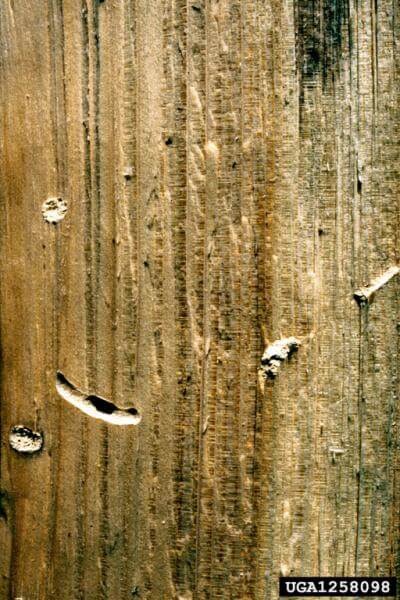
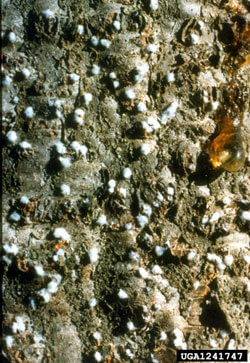
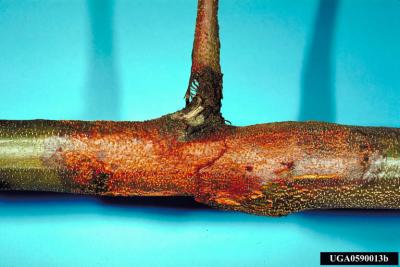
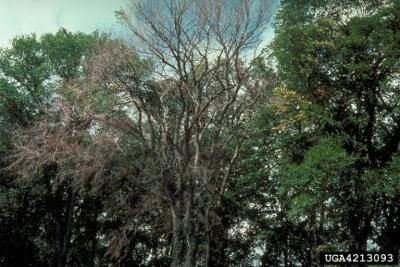
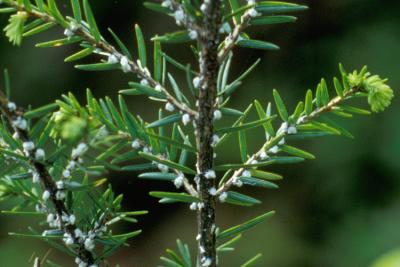
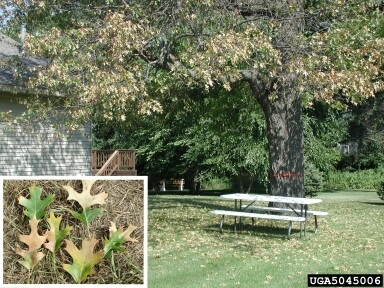
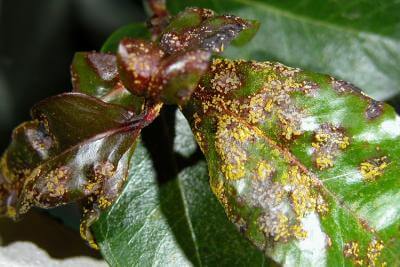
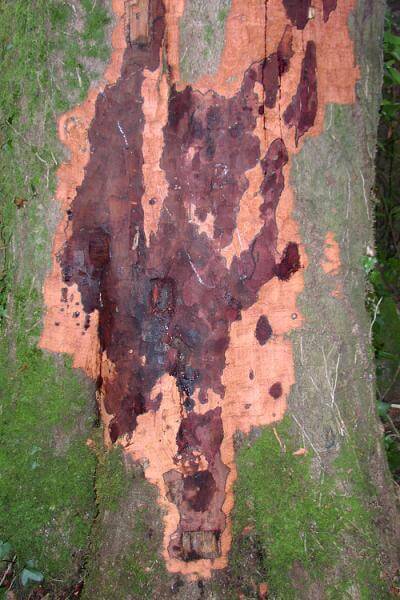
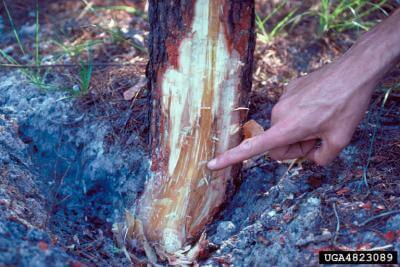
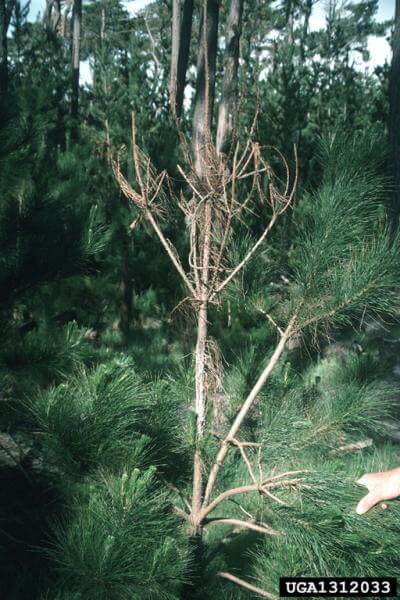
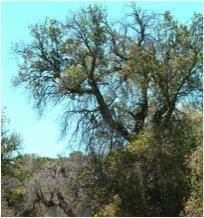
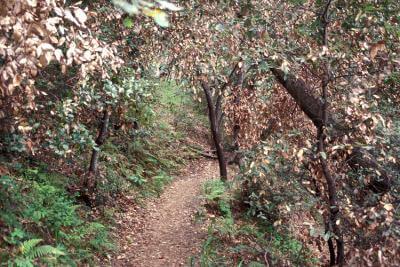
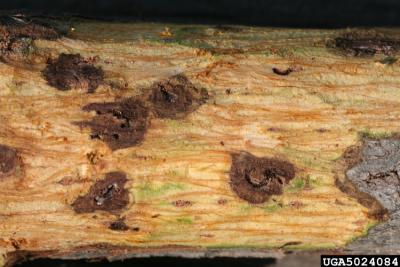
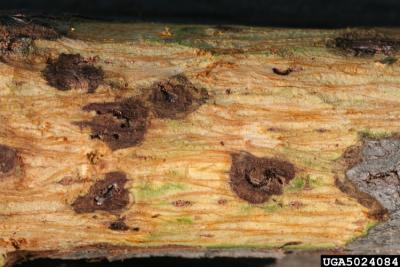
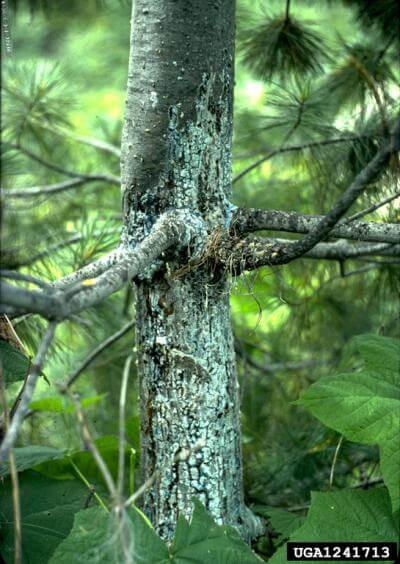
Attack by even a single female beetle is sufficient to inoculate the tree with sufficient numbers of spores of Raffaelea lauricola to initiate disease (Mayfield et al. 2009). The pathogen moves throughout the tree through the sapwood, presumably causing a restriction in the flow of water and wilting of the leaves. In redbay, the entire crown eventually wilts and turns brown over a period that may take from a few weeks to 2-3 months (Mayfield et al. 2009).

More than 90% of redbays with stems greater than 1 inch diameter have died within 2 years in some stands (Fraedrich et al. 2008). Smaller diameter redbay seedlings and sprouts appear to be much less frequently affected by the disease in the field (Fraedrich et al. 2008). Scientists expect continued dramatic reductions in redbay populations, although survival of redbay regeneration in the aftermath of laurel wilt epidemics suggests that redbay will not go extinct (Mayfield et al. 2009).

Redbay is important to wildlife. The fruit is eaten by wild turkey, bobwhite quail and several species of song birds. Deer also consume the fruits and leaves (Brendemuehl, 1990). An additional ecological concern is the dependence of the Palamedes swallowtail butterfly (Papilio palamedes) on redbay and swamp bay (Persea palustris); the butterfly’s larvae feed on these trees – both of which are vulnerable to the disease (J. Foltz, University of Florida, pers. comm. November 2005). A second butterfly, the spicebush swallowtail (Papilio troilus), is also dependent on species in the family Lauraceae and might be harmed if the pathogen proves to damage additional woody plants in that family (J. Foltz, University of Florida, pers. comm. November 2005).

Other native forest species that host the disease include sassafras (Sassafras albidum) and two rare species – pondspice (Litsea aestivalis) (listed as endangered in South Carolina but found through much of the southeastern coastal plain) and the federally listed pondberry (Lindera melissifolia). So far, the impact of the disease on these other hosts is not yet certain (Mayfield et al. 2009). Sassafras trees have been killed by laurel wilt at locations in Georgia (Fraedrich et al. 2008), Florida and South Carolina (Smith et al. 2009)). Other potential hosts in North America are unknown at this time but may include other plants in the Lauraceae (for a list, see Table 1). In laboratory tests, Raffaelea lauricola has appeared to be pathogenic on several other species, including spicebush (Lindera benzoin (L.) Blume), California laurel (Umbellularia californica (Hook. & Arn.) Nutt.); lancewood (Ocotea coriaceae (Sw.) Britton) and eastern sweetshrub (Calycanthus floridus L.) (Mayfield et al. 2009). Some may be at relatively low risk of damage from laurel wilt disease if they either are not attractive to the redbay ambrosia beetle, do not serve as suitable breeding material for the beetle, and/or are geographically isolated from host species in which redbay ambrosia beetle populations can reproduce readily (e.g., redbay) (Mayfield et al. 2009).

The greatest economic impact could be to Florida avocados (Persea americana Mill. ); yard trees and experimentally planted avocados in coastal Florida have been killed (Mayfield et al. 2009). A separate recovery plan for the avocado industry is under preparation (Mayfield et al. 2009).

It appears to be too late to stop the spread of laurel wilt throughout the range of redbay and perhaps into other plant communities as well. Research is needed on tools to manage the beetle and the disease.

A compelling article about laurel wilt, as it is killing red bay (Persea borbonia), was written by Susan Cerulean, and has been posted on line at http://terrain.org/articles/22/cerulean.htm.


Table 1: Lauraceae in the US

Native species

Ocotea moschata

Cassytha filiformis

Ocotea nemodaphne

Cryptocarya mannii

Ocotea portoricensis

Licaria trainers

Ocotea spathulata

Lindera benzoin

Ocotea wrightii

Lindera melissifolia

Persea borbonia

Lindera subcoriacea

Persea palustris

Litsea aestivalis

Persea humilis

Nectandra coriacea

Sassafras albidum

Nectandra hihua

Umbellularia californica

Nectandra krugii


Nectandra membranacea

Exotic species

Nectandra patens

Cinnamomum camphora

Nectandra turbacensis

Cinnamomum verum

Ocotea floribunda

Larus nobilis

Ocotea foeniculacea

Persea americana

Ocotea leucoxylon


Source: J. Johnson, Georgia Forestry Commission.

Pers. Comm. 2006.


Sources

Brendemuehl, R. H. 1990. Persea borbonia (L.) Spreng. Redbay. Pg. 503-506 in Silvics of North America. Volume 2. Hardwoods. USDA Forest Service. Agriculture Handbook 654.Washington, DC.

Cameron, R.S., Bates, C., and Johnson, J. 2008. Distribution and Spread of Laurel Wilt Disease in Georgia: 2006-08 Survey and Field Observations. Georgia Forestry Commission report. September 2008. 28 p. Available online at:http://www.fs.fed.us/r8/foresthealth/laurelwilt/resources/pubs/georgia_laurel_wilt_report_2006-08.pdf

Fraedrich, S.W., Harrington, T.C., Rabaglia, R.J., Ulyshen, M.D., Mayfield A.E. III, Hanula, J.L, Eickwort, J.M. and Miller, D.R. 2008. A fungal symbiont of the redbay ambrosia beetle causes a lethal wilt in redbay and other Lauraceae in the southeastern USA. Plant Disease 92:215-224.

Mayfield, A., Barnard, E., Bates, C., Boone, A., Bulluck, B., Cameron, S., Campbell, F., Duerr, D., Fraedrich, S., Hanula, J., Harrington, T., Johnson, J., Peña, J., Rabaglia, R., Smith, J., Vankus, V. 2009. Recovery plan for laurel wilt on redbay and other forest species caused by Raffaelea lauricola, vector Xyleborus glabratus. National Plant Disease Recovery System, a cooperative project of The American Phytopathological Society and The United States Department of Agriculture, posted at http://www.ars.usda.gov/research/npdrs.

Rabaglia, R.J., Dole, S.A., and Cognato, A.I. 2006. Review of American Xyleborina (Coleoptera: Curculionidae: Scolytinae) occurring north of Mexico, with an illustrated key. Annals of the Entomological Society of America 99: 1034-1056.

Riggins J. J, Hughes, M., Smith, J.A., Mayfield, A. E. III, Layton, B., Balbalian, C. and Campbell, R. 2010. First occurrence of laurel wilt disease on redbay trees in Mississippi. Plant Disease 94: 634.

Smith, J.A., Dreaden, T.J., Mayfield, A.E. III, Boone, A., Fraedrich, S.W., and Bates, C. 2009. First report of laurel wilt disease caused by Raffaelea lauricola on sassafras in Florida and South Carolina. Plant Disease 93: 1079.

Signup to receive one of our newsletters

Monthly updates on firewood outreach, regulation, and industry
Quarterly updates on firewood and forest issues of general interest
Help